Dictionary
Fatigue strengthDictionary
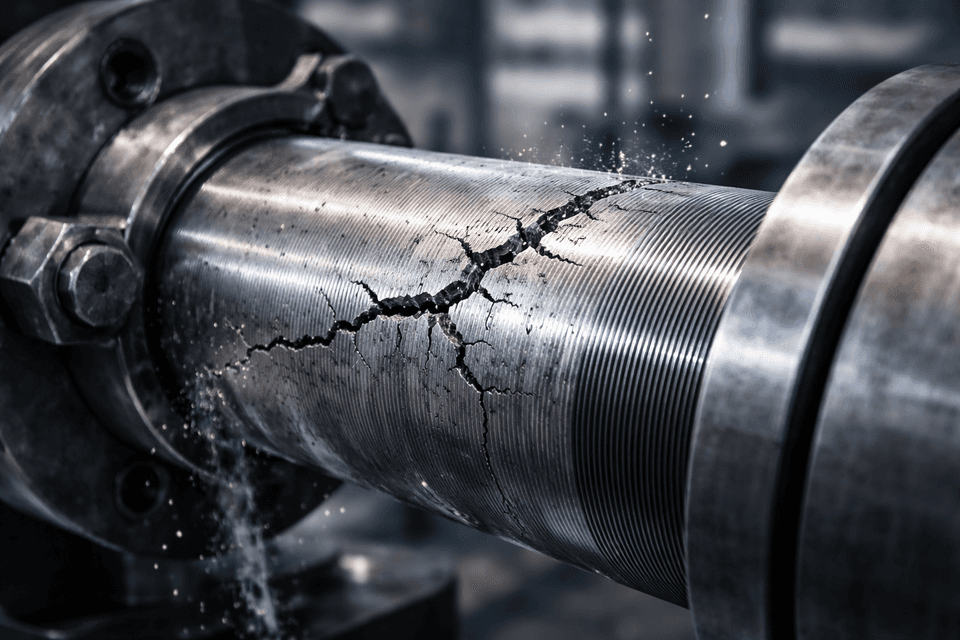
EnglishShort definitionFatigue occurs whenever a material fails under repeated cyclic loading. Over the course of a component's service, irreversible damage such as microcracks can develop over time, which can ultimately lead to fracture. Fatigue is an important factor that must be considered in a component's life cycle analysis. The time to fatigue can be determined in fatigue tests, where the component is subjected to cyclic loads. Design optimizations and the selection of suitable materials can reduce or delay the risk of fatigue.
Dictionary
Fatigue strengthFatigue strength is the ability of a material to withstand repeated loading during operation without failure. It is calculated from the fatigue, the material properties and the real operating conditions. The fatigue strength can be predicted in advance using various tests and simulations. High fatigue strength has a positive effect on reliability and durability, which is particularly important in the automotive and aviation sectors as well as in mechanical engineering.
Dictionary
Impact strengthImpact strength describes the ability of a material to withstand impact loads or sudden forces without breaking or permanently deforming. It is usually determined using test methods such as the Charpy or Izod impact test, in which the energy that a material absorbs at break is measured. In the manufacturing industry, impact strength is decisive for the selection of materials in safety-relevant applications, such as vehicle components or machine components that are exposed to high mechanical loads. High impact strength ensures the reliability and durability of products under changing load conditions, which helps to reduce failures and increase safety.
Dictionary
ResilienceResilience is the ability of a material to withstand stresses such as external forces or loads without failure. This property is of central importance in the manufacture and design of components, particularly in construction and mechanical engineering. The load limit of a material/component can be determined using various tests. The load limit varies depending on the physical properties of the material or the condition and processing of the component. A high load-bearing capacity is particularly important for safety and durability.
Dictionary
Impact resistanceImpact resistance describes the strength of a material under sudden loads, such as hard blows or impacts. In various tests, such as the Charpy or Izod test, the impact resistance is determined by testing the material for sudden loads until it breaks or tears. High impact resistance is particularly important for applications with high dynamic loads. This is achieved by certain plastics or alloy steels, for example.
Dictionary
MagnetizabilityMagnetizability describes the ability of a material to develop its own magnetic properties under the influence of an external magnetic field. Materials such as iron, nickel and cobalt, some of which retain their magnetic properties even after the external magnetic field has been removed, are particularly suitable for this process. The magnetizability of a material is characterized by its permeability. High magnetizability makes materials particularly interesting for electrical engineering or magnetic bearings.
Dictionary
ViscosityViscosity describes the internal friction of a fluid and is a measure of its flowability. In the manufacturing industry, viscosity is crucial for processes such as casting, extrusion and coating, as it influences the behavior of materials during processing. Optimal viscosity ensures consistent production processes, improves the quality of end products and minimizes material losses. In addition, viscosity is important in the selection of lubricants and coolants to increase the efficiency and service life of machines. Accurate measurement and control of viscosity enables companies to precisely control their production processes and remain competitive.
© assemblean 2026 | All rights reserved.