Dictionary
Dimensional AccuracyDictionary
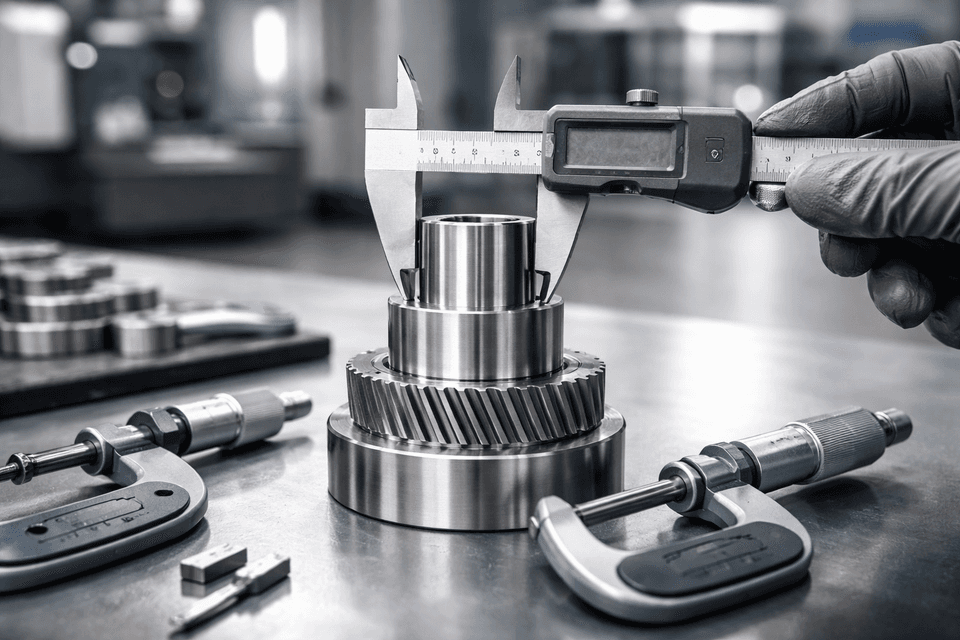
EnglishShort definitionIn a technical context, tolerance refers to the permissible deviation from defined standards, dimensions or other specifications. Tolerances are therefore understood as limit values with which the full functionality and accuracy of fit of a component can be guaranteed despite deviations. Tolerances are very important for the quality of components, as well as for the decision-making process for the optimum manufacturing process. The stricter the tolerances, the more precise the production must be, which usually results in higher production costs.
Dictionary
Dimensional AccuracyDimensional accuracy refers to the precision with which manufactured components comply with the specified dimensions and tolerances. It is a key quality factor in production, as it ensures the accuracy of fit and functionality of the end products. Dimensional accuracy is achieved through precise machines, careful process control and regular quality checks. High dimensional accuracy minimizes waste and rework, increases production efficiency and boosts customer satisfaction. It is also crucial for compliance with industry standards and a company's competitiveness on the market. In practice, consistent dimensional accuracy enables reliable series production and promotes long-term success in the manufacturing industry.
Dictionary
PlasticizingPlasticizing refers to the process in which plastics are made more flexible and easier to process by adding plasticizers or other additives. This process changes the physical properties of the material by influencing the molecular structure and increasing the mobility of the polymer chains. In industry, plasticizing is used to adapt plastics to specific requirements, for example for the production of films, coatings or flexible components. Through plasticizing, materials can achieve higher elasticity, better formability and improved processability, which optimizes production processes and increases the quality of the end products. Plasticizing is therefore an essential step in plastics processing that has a significant impact on both technical performance and economic efficiency.
Dictionary
Subtractive manufacturingSubtractive manufacturing refers to a manufacturing process in which material is removed from a blank using various techniques such as turning, milling or drilling to form the desired end product. This process is widely used in the metal, plastics and wood industries. It enables the precise production of complex components with tight tolerances and high surface quality. Subtractive manufacturing is essential for series production, prototyping and customization in manufacturing technology. By using modern CNC machines (computerized numerical control), efficiency and accuracy can be further increased, making companies more competitive.
Dictionary
Technical drawingThe technical drawing represents a true-to-scale and detailed component. This is used to manufacture and check a component and is a central task in the manufacturing and optimization process. The drawing contains precise information on dimensions, tolerances, materials and surface finishes, for example. In order to improve the comprehensibility of such drawings, they are created according to standardized norms. To create a technical drawing, it is best to create it digitally using CAD software.
Dictionary
Casting radiusThe casting radius is an important factor when planning castings in order to avoid cracks, fractures and other limitations of the casting. The casting radius includes all corners and edges of a casting that are created during the manufacturing process. The better the casting radius is selected for the respective part, the higher the material flowability as well as the removal of the parts from the mold. In order to implement precise casting radii during production, it is necessary to record these in the technical drawings using minimum and maximum radii. Well-chosen casting radii can significantly improve the service life and reliability of components.
Dictionary
WorkpieceIn manufacturing, a workpiece refers to the basic blank or starting material that is shaped using various machining processes such as turning, milling or grinding. It forms the basis for the manufacture of an end product and can comprise metal, plastic or other materials. Workpieces are manufactured precisely according to technical drawings and specifications in order to achieve the desired dimensions and properties. The quality and accuracy of the workpiece is crucial for the functionality and durability of the finished product. In industry, the efficient machining of workpieces enables high production quality and contributes to the optimization of manufacturing processes.
© assemblean 2026 | All rights reserved.